Poria: The Quiet Fungus in the Soup Pot

Some herbs announce themselves — bright flowers, bold scents, bitter roots. Poria does the opposite: it hides underground for years, says nothing at all, and then quietly thickens a family's soup. Time to meet the quietest herb on the pattern chart.
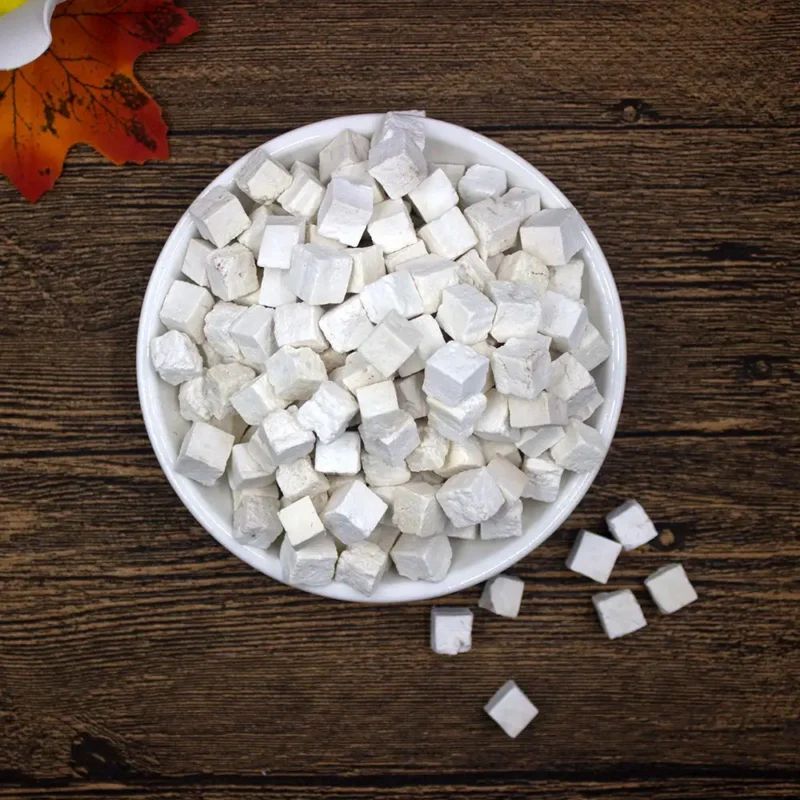
- Meet poria — the herb that is not a plant. Phục linh (Poria cocos) is not a root, a seed, or a mushroom with a cap. It is the firm, dense resting body of a fungus — a sclerotium — that grows buried on and around pine roots. Dug up, peeled, and cut into plain white cubes and slices, it is the quietest-looking thing on the herbalist's shelf, and the signature herb of the Dampness pattern.
- The dampness idea. "Dampness" (thấp) is TCM's picture of waterlogged heaviness: limbs that feel heavy, a face puffy in the morning, a thick coat on the tongue — as if the body's fluids were moving too slowly and settling where they should not. Poria's classic job description answers it directly: leach out dampness, and support the spleen — the system tradition holds responsible for moving those fluids.
- The tradition lens. Poria's nature is neutral and its taste famously bland, and that gentleness is the point: it is a food-like herb that can live in daily soups and congees for the whole family, softening until it nearly disappears. Tradition gives it a second, quieter job too — ninh tâm an thần, settling a restless heart-spirit — which is why you will also meet it in evening soups.
- The evidence lens. Honestly labelled: poria has centuries of kitchen and formula use, but strong modern clinical evidence for the home cook's soup pot is limited, and this lesson makes no treatment claims. We learn it the WomenLoveHerbs way — as tradition, as food, and as a way of seeing the dampness pattern — while illness, and any swelling that worries you, stays with your clinician.
🛡️ Safety first
Poria is mild and food-like in traditional kitchen use — and still worth a moment of care. Tradition understands it as helping fluids move and leave the body, so if you take diuretic (water) medication, are pregnant, or are dealing with dehydration or pronounced dryness, check with your clinician before using poria regularly rather than occasionally in soup. And swelling that is new, one-sided, or worrying always deserves medical attention — never just a soup.
🎯 Try it
Next time you make a pot of soup or congee, add a small handful of poria cubes at the start and let them simmer until soft. Taste the broth near the end and notice what "bland" really does: not flavour, but a quiet thickening. You have just met dampness's oldest kitchen companion.
✏️ Quick quiz
Herbalingo is education only. Nothing here diagnoses, treats, or cures any condition, or replaces your healthcare professional.