Goji Berry: The Little Red Berry in the Soup Pot
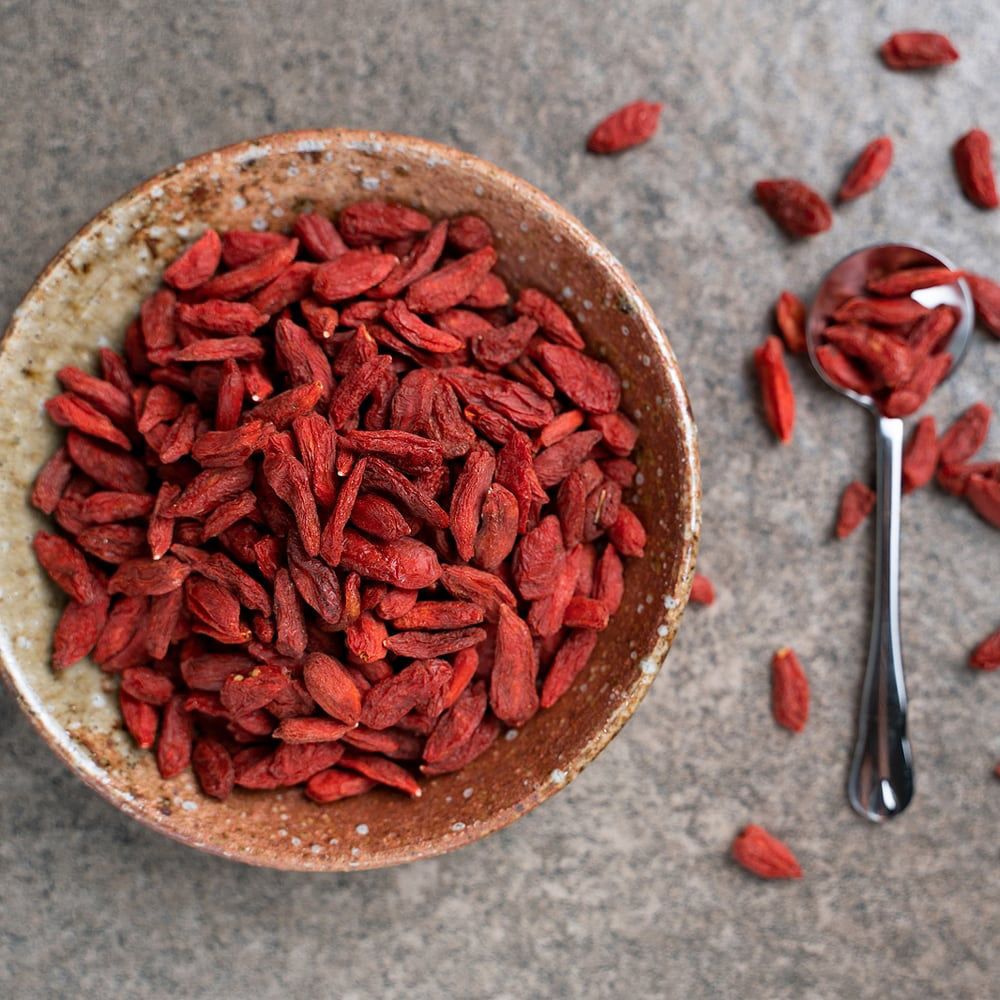
In many kitchens across China and Vietnam, a pot of soup near the end of cooking gets a small handful of bright red berries. They plump up in the broth, soften, and turn gently sweet. Those berries are kỷ tử — goji — a food-herb so friendly that many families meet it at the dinner table long before they ever meet it in a herb shop.
- Meet goji. Goji berries are the dried fruit of Lycium barbarum, a shrub in the nightshade family — the same family as tomatoes and potatoes. Sold dried like raisins, they are eaten as a snack, steeped in warm water, and simmered into soups and teas. In English they are also called wolfberries.
- The tradition lens. In TCM, kỷ tử is a classic nourishing herb: tradition describes it as nourishing Yin and supporting the Liver and Kidney in traditional language. In this course it is the signature herb of the Yin deficiency pattern (Âm hư) — the pattern tradition associates with dryness and a need for deep, gentle nourishment. A classic pairing is goji with chrysanthemum in the same teapot.
- The evidence lens. Goji is a genuinely nutritious food — a source of carotenoids such as zeaxanthin, plus polysaccharides that researchers find interesting. Human studies are still modest in size, so the honest label is: a nourishing traditional food with promising research, not a treatment for eyes, energy, or anything else. Enjoy it the way grandmothers serve it — as food.
- Choosing good berries. Look for bright red-orange berries that feel slightly pliable, not rock-hard. Very dark, brittle berries are usually old. The taste should be gently sweet with a faint tang. Give them a quick rinse, soak briefly if you like them plump, and add them near the end of cooking so they stay whole and sweet.
🛡️ Safety first
Goji is a food for most people, but it has real cautions. It has been linked in case reports to changes in how warfarin (a blood thinner) works — if you take warfarin, talk with your clinician before eating goji regularly. Goji may also gently nudge blood sugar and blood pressure, so check first if you take medication for either. Because it is a nightshade-family plant, notice if it bothers you the way tomatoes or peppers might. Traditional sources advise care in pregnancy with concentrated extracts; ordinary food amounts in soup are a different scale, but when in doubt, ask your clinician.
🎯 Try it
This week, add a small handful of goji berries to a pot of soup in the last ten minutes of cooking — or steep a spoonful in warm water, sip the soft amber 'tea', and eat the plumped berries at the bottom of the cup. Notice the flavour slowly. That is the whole assignment.
✏️ Quick quiz
Herbalingo is education only. Nothing here diagnoses, treats, or cures any condition, or replaces your healthcare professional.